Essential for Structural Stability –Anchor Bolt
Release time:2026-03-03 Click:18
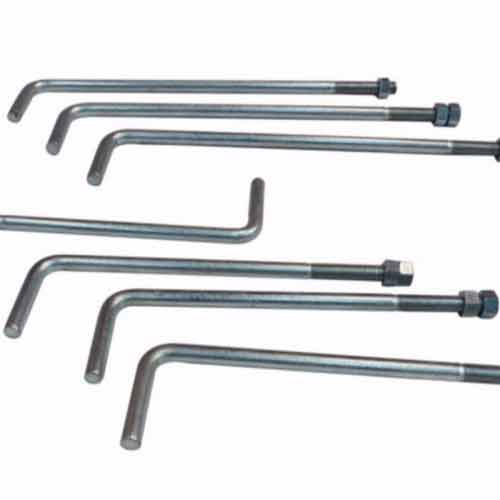
Anchor bolts represent the critical connection point between structural elements and concrete foundations, providing the essential stability and load transfer required for permanent building installations. These heavy-duty fasteners typically feature a threaded end extending above the concrete surface, a shaft embedded within the concrete mass, and often include a specialized curved, L-shaped, or J-shaped hook at the bottom to prevent pullout under extreme loading conditions. Manufactured from high-strength steel, typically Grade A36 or higher, anchor bolts must withstand tremendous shear, tensile, and moment forces while maintaining precise positioning throughout the construction process. The bolt diameter typically ranges from 1/2 inch to 2 inches, with lengths varying from 6 inches to 36 inches depending on application requirements and structural engineering specifications. Advanced anchor bolt designs incorporate epoxy coating for enhanced corrosion resistance, particularly in marine or chemically aggressive environments where long-term durability is essential.
The manufacturing process for anchor bolts involves precision machining and heat treatment operations to achieve the required strength characteristics and dimensional accuracy. Steel bars undergo initial threading operations on both ends, with the embedded portion featuring a smooth surface for proper concrete bonding while maintaining adequate surface roughness for stress transfer. The hook configuration undergoes precise bending to create a tight curve radius that maximizes concrete engagement without creating stress concentrations. Heat treatment processes including normalizing or quenching and tempering establish the desired hardness levels for the threaded portions while maintaining appropriate ductility in the hook area. Quality control procedures include magnetic particle inspection for detecting surface defects, dimensional verification to ensure proper fit in concrete forms, and tensile testing to verify compliance with specified strength requirements. Some anchor bolts incorporate plate washers or custom hardware specifically designed for structural steel connections.
Installation procedures for anchor bolts require careful attention to positioning accuracy and proper concrete consolidation to ensure optimal structural performance. Proper installation begins with precise marking and drilling of anchor bolt holes in concrete forms, with templates often used to guarantee accurate spacing and alignment. The bolts are positioned and secured within forms using custom hardware that maintains vertical alignment and prevents displacement during concrete placement. Concrete placement requires careful vibration around anchor bolts to eliminate air voids and ensure complete consolidation around the embedded portions. Curing procedures must account for anchor bolt location to prevent premature loading that could cause misalignment or bond failure. Post-installation procedures include verification of precise positioning using surveying instruments, application of protective coatings to exposed threads, and installation of bearing plates or structural hardware as specified in construction drawings. Field adjustments may be necessary to accommodate minor variations in bolt position while maintaining structural integrity.
Anchor bolts serve as fundamental components in diverse construction applications, from residential foundations to major infrastructure projects, where reliable connection between structural elements and concrete is essential. Residential applications include garage door installations, deck-to-foundation connections, and equipment anchoring where precise positioning and load transfer are critical for safety and performance. Commercial construction utilizes anchor bolts for storefront installations, equipment bases, and structural steel connections where high-capacity load transfer is required. Industrial applications include heavy machinery installation, conveyor system anchoring, and facility infrastructure where resistance to vibration and dynamic loads is essential. Infrastructure projects require anchor bolts for bridge components, highway infrastructure, and utility installations where long-term stability and load capacity are non-negotiable requirements. The critical nature of anchor bolt performance has led to extensive engineering analysis, testing protocols, and specification requirements in building codes worldwide, emphasizing the importance of proper selection, installation, and maintenance for structural safety and longevity.
Previous article:Precision and Power of the Lag Bolt
Next article:Industrial-Strength Fastening with Anchor Bolt M16 Solutions
Hot products
Mobile: +86 15369215227
Email:metalproducts2022@163.com
Email:1626757181@qq.com