Product details description
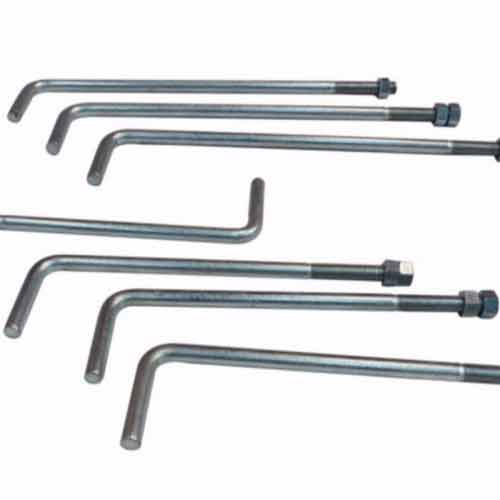
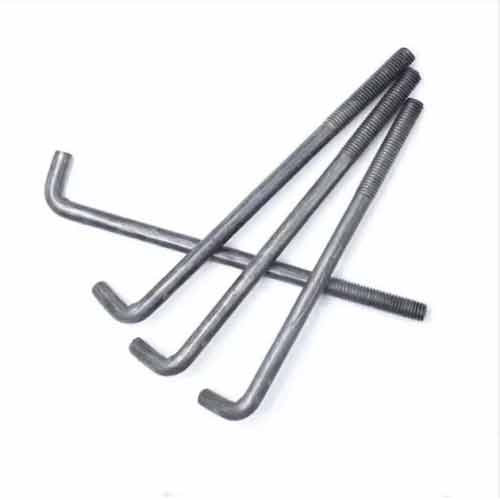
Anchor bolts are fundamental to securing structures to concrete, masonry,
or stone, and understanding their types ensures proper load handling. L-type
anchor bolts, recognizable by their right-angle bend, are embedded in wet
concrete before it sets, forming a strong mechanical interlock as the concrete
cures. They are ideal for heavy machinery bases, column footings, and structural
steel connections where high shear and tensile strength are needed. The short
leg of the “L” resists pull-out, while the long leg transfers loads into the
concrete.
Wedge anchors are a subtype of expansion anchor used in pre-drilled holes
in cured concrete. They consist of a threaded bolt and a wedge-shaped sleeve
that expands against the hole walls when the nut is tightened, creating a tight
grip. Wedge anchors excel in medium to heavy loads, such as anchoring
guardrails, racking systems, or HVAC units. They allow for bolt removal and
reinstallation, offering flexibility in assembly and maintenance. Proper hole
diameter and depth matching the anchor size are critical for performance.
Expansion shields and sleeve anchors serve lighter to moderate loads in
masonry or brick. Expansion shields are inserted into a pre-drilled hole and
expanded by driving a screw or bolt through them, gripping the masonry through
radial pressure. Sleeve anchors combine a bolt, sleeve, and expandable plug;
tightening the bolt draws the plug outward, wedging the sleeve against the hole
wall. These are common in securing light fixtures, handrails, and signage where
vibration or sudden loads are minimal.
Chemical anchors represent a high-performance solution for extreme loads or
poor substrate conditions. A resin cartridge is inserted into the hole, and the
bolt is driven in; the resin cures to bond chemically with the concrete or
masonry, providing exceptional tensile and shear capacity. Used in seismic
bracing, tower installations, and critical infrastructure, chemical anchors
require precise hole preparation and curing time. Selecting the right anchor
type—considering load magnitude, substrate material, and environmental
conditions—ensures safety, stability, and long-term reliability.
Previous article:
Anchor Bolt Repair - Solutions for Loose or Damaged Fixings
Next article:
Load-Bearing Capacity Analysis of Single Anchor Bolt in Steel Column Bases