Product details description
Anchor bolts are the critical connection points between structural steel
and concrete foundations, making their material specifications a matter of life
safety and structural integrity. The American Society for Testing and Materials
(ASTM) provides the definitive standards for these fasteners, primarily governed
by ASTM F1554. This specification covers quenched and tempered alloy steel
anchor bolts, as well as carbon steel bolts intended for use in structural
applications. Understanding these standards is essential for engineers to ensure
that the bolts can withstand the immense tensile and shear forces exerted by
heavy structures like buildings, towers, and highway signposts.
The grading system under ASTM F1554 categorizes bolts based on their
tensile strength, with Grade 36, Grade 55, and Grade 105 being the most common.
Grade 36 provides a minimum tensile strength of 70,000 psi, while Grade 105
offers up to 125,000 psi for high-stress environments. The selection of the
specific grade depends entirely on the load calculations of the structure. For
instance, a high-rise building in a seismic zone requires Grade 105 bolts to
resist dynamic uplift forces, whereas a standard industrial shelving unit might
only require Grade 36. The material composition must also adhere to strict
limits on carbon, manganese, phosphorus, and sulfur to ensure consistent
weldability and ductility.
Corrosion resistance is a pivotal aspect of the ASTM specifications,
particularly for outdoor infrastructure. The standards mandate specific coating
requirements, such as hot-dip galvanization in accordance with ASTM A153. This
zinc coating acts as a sacrificial anode, protecting the steel even if the
surface is scratched during installation. For highly corrosive environments,
such as marine piers or chemical plants, supplementary coatings like epoxy or
zinc-rich paints are specified. The ASTM standards also outline the testing
methods for these coatings, including thickness measurements and adhesion tests,
to guarantee long-term durability against rust and oxidation.
Dimensional tolerances are another critical component of the ASTM
specifications. The standards define precise parameters for thread pitch,
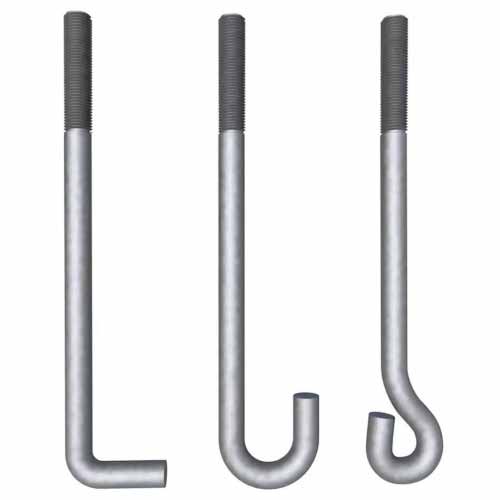
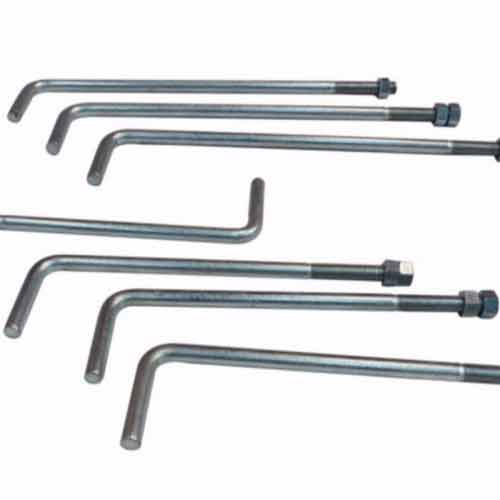
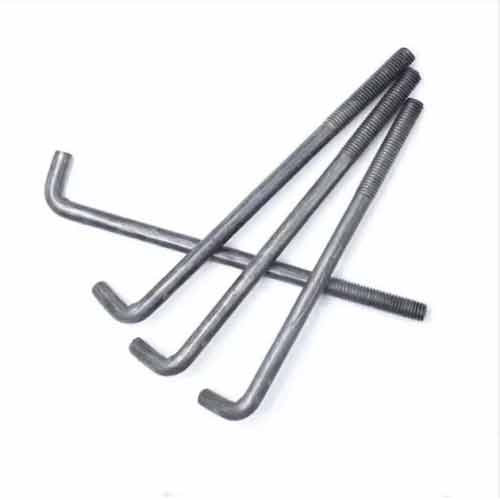
diameter, length, and bend radius. Anchor bolts often feature J-hooks or L-hooks
at the end to embed into the concrete, and the geometry of these hooks must be
exact to ensure proper concrete flow and bond strength during the pour.
Deviations in thread pitch can lead to stripping under load, while incorrect
embedment depth can cause the concrete to fail before the steel yields.
Manufacturers must provide mill test certificates verifying that every bolt
shipped meets these dimensional criteria.
Impact testing is required for bolts used in low-temperature service or
critical fracture-critical members. The Charpy V-Notch test measures the energy
absorbed by the material during fracture, ensuring the steel does not become
brittle in cold climates. This is vital for infrastructure in northern regions
where temperatures can drop below freezing, as a brittle anchor bolt could snap
under wind load, leading to catastrophic structural failure. The ASTM standards
stipulate the minimum impact energy required based on the service temperature,
ensuring the material retains its toughness and ductility even in harsh weather
conditions.
Finally, the traceability and certification process is strictly regulated.
Each batch of anchor bolts must be marked with the manufacturer’s symbol, the
grade, and the heat number, allowing for full traceability back to the raw steel
mill. Independent third-party inspection agencies often verify compliance with
ASTM standards through chemical analysis and mechanical testing of sample lots.
This rigorous quality assurance process ensures that the fasteners holding up
our bridges and skyscrapers are not just generic steel rods but
precision-engineered components manufactured to exacting safety protocols.
Previous article:
Load-Bearing Capacity Analysis of Single Anchor Bolt in Steel Column Bases
Next article:
Concrete Anchor Bolts - Certified for Structural Integrity